
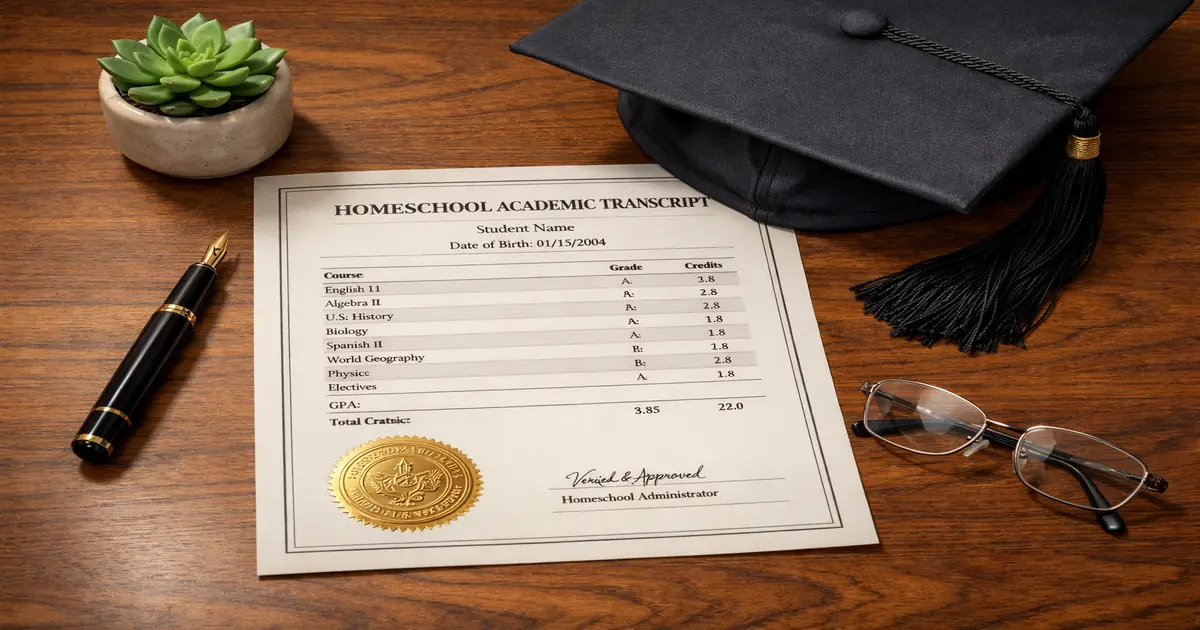
How to Make A Homeschool Transcript
Many homeschooling parents begin to feel nervous when high school approaches, especially when they start asking how to make a homeschool transcript. Colleges, scholarships, and future programs all expect clear academic records, and parents want to be sure they do it right. The good news is that creating a homeschool transcript does not need to be complicated. With the right structure, clear records, and guidance, parents can confidently document their student’s academic journey. As Best Private Christian School in Fleming Island FL, we help families understand how to create transcripts that reflect both academic achievement and faith-based learning.
Understanding the Purpose of a Homeschool Transcript
Before learning how to make a homeschool transcript, it helps to understand what it is meant to do. A transcript is a summary of a student’s high school coursework, grades, and credits. It tells colleges and other institutions what the student studied and how they performed.
For homeschool families, the transcript replaces what a traditional school would normally issue. That means clarity and consistency are key. We encourage families to think of the transcript as a story of the student’s academic growth rather than just a list of classes.
What Information to Include
When parents ask how to make a homeschool transcript, one of the first questions is what details belong on it. A strong transcript includes the student’s name, graduation date, and a list of completed courses by academic year. Each course should show the credit earned and the final grade.
Christian Home Academy advises families to keep course names clear and familiar. Using standard titles like English, Algebra, Biology, and World History helps colleges understand the transcript quickly. Faith-based courses can be included as well, such as Bible or Christian Studies.
Assigning Credits and Grades
Another key step in how to make a homeschool transcript is assigning credits accurately. Most high school courses equal one credit when completed over a full academic year. Half-year courses typically equal half a credit.
Grades should reflect actual performance, not effort alone. Parents may use tests, assignments, projects, and participation to determine final grades. We support families by helping them set grading standards that are fair, consistent, and academically sound. Also read about How To Switch From Public School To Homeschool.
Organizing Courses by Year
Colleges like to see progress over time, so transcripts should list courses by grade level. This structure makes it easier for admissions teams to understand academic development. When learning how to make a homeschool transcript, organization matters just as much as content.
We encourage families to keep detailed records throughout high school so that transcript creation is simple and accurate at graduation time. Planning ahead prevents stress later.
Including GPA and Graduation Details
Calculating a grade point average is another important part of how to make a homeschool transcript. GPA helps colleges compare academic performance. Parents can use a standard 4.0 scale unless another system is required.
Graduation requirements should also be clear. We help families align coursework with graduation expectations so transcripts meet both homeschool and college readiness standards.
Conclusion
Learning how to make a homeschool transcript empowers parents to confidently support their student’s future. With thoughtful planning, accurate records, and guidance, homeschool transcripts can be just as professional and effective as any traditional school document. Christian Home Academy is committed to helping families navigate this process so students are fully prepared for what comes next.
